If you’re in healthcare, you may have noticed that your website traffic isn’t as strong as it used to be. There’s good news: it's not because your SEO suddenly tanked or your competitor hired some marketing genius.
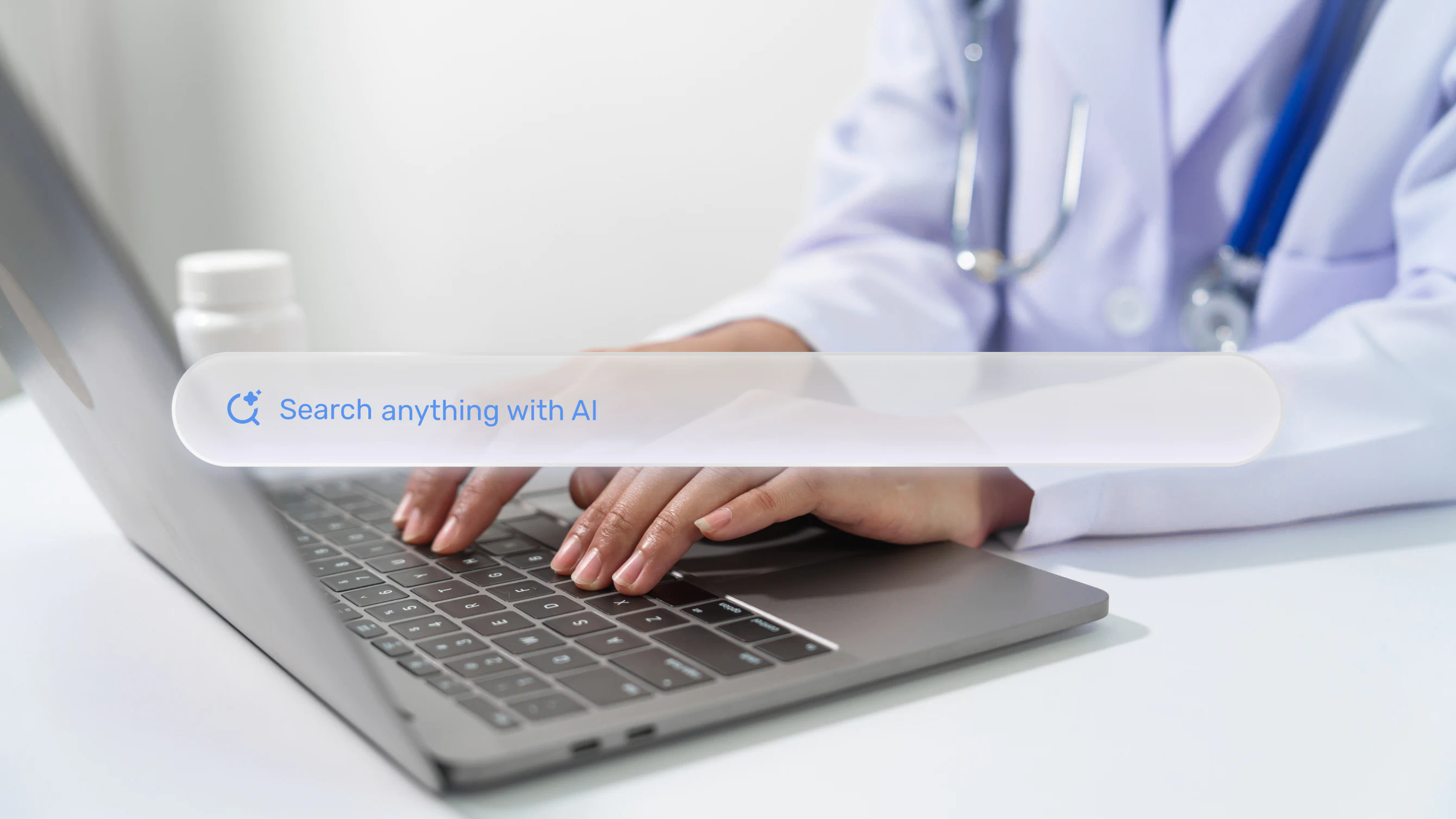
It's because Google, AI platforms like ChatGPT and Perplexity are answering patient questions without ever sending them to your website. Welcome to the era of zero-click searches, where ranking #1 doesn't guarantee you'll actually get the click.
For healthcare practices, this is a bigger problem than most industries. When someone searches "best ENT near me" or "left-side abdominal pain," they're often looking for immediate answers before they even consider booking an appointment. And if AI gives them that answer directly? You just lost a potential patient without them ever knowing you exist.
Here's the reality: According to Digital Applied, as of April 2026, 64.82% of Google searches now end without a click. to any website. That number will continue to climb as AI overviews become more prevalent.
That may sound like bad news, but there’s an upside: there are strategies that work to combat this problem. We know because we've been doing it for over a decade.
What is a zero-click search? And why is it affecting healthcare practices?
What is a zero-click search? It's exactly what it sounds like. Someone types a query into Google, gets their answer directly from the search results page through featured snippets, knowledge panels, or increasingly, AI-generated summaries and never clicks through to any website.
For a medical practice, this might look like:
- "What does left-side abdominal pain mean?" → AI Overview provides a detailed explanation
- "How long does physical therapy take after knee surgery?" → Featured snippet answers the question
- "Best ER in San Antonio" → Local pack shows names and ratings, but patient never visits a website
The zero-click search market has grown fast, and is still growing. Bain’s recent survey finds that about 80% of consumers now rely on “zero-click” results in at least 40% of their searches, reducing organic web traffic by an estimated 15% to 25%. While this is affecting almost every industry, healthcare in particular is taking a big hit.
How AI is changing search for healthcare
AI search fundamentally alters how patients find and evaluate medical practices. Traditional search used to work predictably. A patient would search for "sinus doctor near me," click on your site, read about your practice, and book an appointment. Simple.
Now? AI platforms synthesize information from multiple sources and present a comprehensive answer before the patient ever considers clicking. ChatGPT will recommend dermatologists based on reviews, specialties, and location, allowing patients to make decisions entirely within the AI interface.
Even Google's own AI Overviews now answer complex medical questions that used to drive significant traffic to practice websites. And even if your website is mentioned in an AI Overview, organic click-through rates have dropped by 61%, meaning you’re not guaranteed the traffic. But here's where most healthcare practices are getting it wrong: they're either ignoring this shift entirely or panicking and abandoning SEO altogether. Both are mistakes.
The paid ads panic (and why it’s not the primary solution)
We’ve seen a lot of practices react to declining organic traffic by pouring more money into paid search. The logic seems sound: if organic clicks are down, just buy the clicks instead. And while we love paid ads here at Baal & Spots, it’s not the sole solution to combating zero-click searches.
Is PPC better than SEO? For healthcare practices specifically? Not even close and anyone telling you otherwise is probably selling PPC management services. Here's why: high-paying PPC keywords in healthcare are insanely expensive. And guess what's happening to those PPC clicks when AI Overviews appear on the page? They're dropping too. So you're paying premium prices for dramatically fewer clicks. That's not a strategy — that's just expensive.
The AI overview impact on paid search is brutal, and don’t get us wrong, PPC has its place in a healthcare marketing strategy. But treating it as the solution to zero-click searches is like treating a broken leg with aspirin. You're addressing a symptom, not the actual problem.
What actually works: Combat strategies from 10+ years in healthcare marketing
At Baal & Spots, we've spent over a decade building integrated marketing systems specifically for medical practices. Our healthcare clients average 6+ years with us (not 6 months), and we've generated millions in measurable patient revenue.
We've seen every algorithm update, every platform shift, and every "the sky is falling" moment in digital marketing. And here's what we know for sure: zero-click searches aren't going away. But they're also not the death of organic marketing that some agencies are claiming.
1. Build AI visibility alongside traditional SEO
You can't just optimize for Google anymore. You need to optimize for AI platforms that patients are actually using to research their healthcare decisions.
This means developing a real strategy around AI visibility, making sure your practice shows up when ChatGPT, Perplexity, or Google's AI Overviews answer questions about your specialty. It's not about gaming the system. It's about providing the kind of authoritative, well-structured content that AI platforms recognize as credible. This is the same quality Google's E-E-A-T framework rewards.
|
And no, this doesn't mean abandoning traditional SEO. The question "Should I focus on SEO or GEO for my website?" is the wrong question. You need both working together. Traditional SEO still drives direct traffic from searches that DO result in clicks. And the authority you build through good SEO is exactly what makes AI platforms trust your content enough to reference it. |
2. Own your specialization (not just your location)
Most healthcare practices optimize heavily for "best [specialty] in [city]" keywords. That's fine. But it's also exactly the kind of query that's getting destroyed by zero-click searches because Google can answer it with a Local Pack and AI Overview.
Instead, go deeper on your actual expertise. If you're an orthopedic surgeon, don't just target "orthopedic surgeon Houston." Target the specific procedures, conditions, and treatment approaches where you have real expertise.
Create comprehensive content around:
- Specific procedures you perform (with detailed explanations of what sets your approach apart)
- Conditions you treat (including symptom guides and treatment options)
- Recovery timelines and what patients should expect
- Questions patients always ask during consultations
This kind of deep, specialized content is harder for AI to fully replace because it requires genuine medical expertise and not just aggregating information from other sources. And when AI does cite it, you're building authority that drives patients to seek you out specifically.
3. Treat zero-click impressions as brand building, not failure
Here's a mindset shift that'll help: every time AI cites your content or Google shows your practice in a zero-click search result, you're building brand awareness (as well as measurable site authority). The patient might not click today. But when they're ready to book an appointment, whose name do they remember seeing?
This is especially true in healthcare, where the patient journey is often longer than other industries. Someone researching knee replacement options in March might not be ready to book a consultation until June. If your practice name keeps appearing in AI summaries and search features during their research phase, you're the one they'll think of when they're ready.
|
Track this differently than you track clicks. Monitor brand searches for your practice name. Watch for increases in direct traffic. Measure consultation bookings and ask patients how they found you. The zero-click search might not show up in your Google Analytics, but it's still working. |
4. Double down on what AI can't replace
AI can summarize medical information. It can explain procedures. It can even recommend practices based on reviews and credentials. But it can't make patients feel understood. It can't build the kind of trust that comes from seeing real patient stories, reading a doctor's authentic perspective on treatment approaches, or seeing a video of the actual environment where they'll receive care.
This is where video content, patient testimonials, virtual tours, and thought leadership from your actual physicians become invaluable. Create content that showcases the human side of your practice — the side that AI can describe but never truly replicate.
The integrated approach (because healthcare marketing isn't single-channel anymore)
The practices that are thriving in the zero-click search era aren't the ones doing one thing really well. They're the ones building integrated systems where SEO, GEO (generative engine optimization), content marketing, PPC, and reputation management all work together.
This is exactly what we build with our healthcare clients. Not a "6-month SEO package" that ignores everything else. Not a "PPC campaign" that burns budget without considering organic visibility. A healthcare marketing strategy that adapts to how patients are actually finding and evaluating providers in 2026.
Our healthcare marketing strategies include:
- Traditional SEO that builds the authority AI platforms look for
- GEO-optimized content that gets cited in AI summaries
- Strategic PPC for high-intent keywords where clicks still convert
- Reputation management because reviews matter more than ever
- Content that demonstrates genuine medical expertise
- Analytics that track the full patient journey, not just last-click attribution
Because here's the truth: zero-click searches are a symptom of a bigger shift in how people find information online. Fighting that shift is pointless. Adapting to it strategically? That's how healthcare practices win.
Baal & Spots helps healthcare practices thrive online
Zero-click searches are real, they're growing, and they're fundamentally changing how patients discover healthcare providers. Ignoring that will set you back. But panicking and abandoning everything that's been working won’t get you anywhere either. Most healthcare marketing agencies will either tell you "SEO is dead, go all-in on PPC" or "just keep doing what you're doing and it'll be fine." Both are wrong.
What you actually need is a healthcare marketing agency that understands both the technical side of how AI is changing search AND the specific dynamics of healthcare marketing. Someone who's been doing this long enough to know which "algorithm apocalypse" predictions are real and which are just noise. Someone who's generated actual patient revenue, not just traffic reports. Hmm…we wonder who that could be? Oh, it’s us!
We've been that partner for medical practices for over a decade. Our clients stick with us for 6+ years on average because our strategies work and because we're honest about what will and won't move the needle for your practice. We'll show you exactly where you're losing visibility, which strategies will work for your specialty and market, and how to build a system that generates patients whether they click through from Google or not.
Want to know how zero-click searches are actually impacting your practice and what you can do about it? Let's talk.
More Helpful Articles by Baal & Spots:
- 2026 SEO Trends to Follow: Expert Tips & Insights
- How To Maintain Brand Authenticity in the AI Era
- Baal & Spots: The SEO Agency Houston Businesses Trust
- AI Marketing Tools We Use to Elevate Your Strategy
- How to Use Google for Business Marketing